Bringing home a puppy is an exciting experience, but providing the right nutrition is just as important as giving them love, exercise, and training. One common question among new pet parents is: Can puppies eat adult dog food?
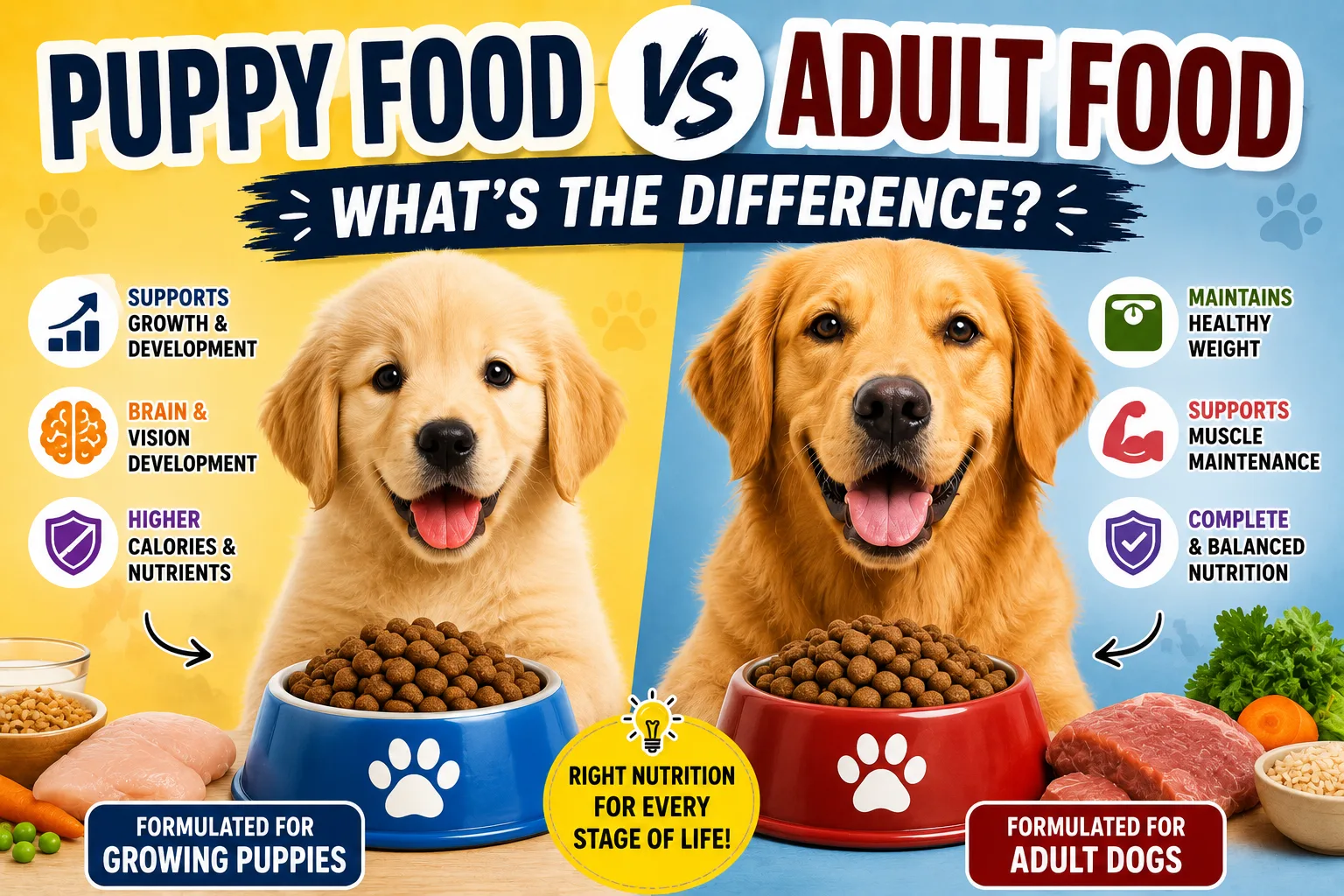
The short answer is that puppies generally have different nutritional needs from adult dogs. Puppy food is formulated to support growth and development, while adult dog food is designed primarily to maintain an already-developed body.
Let’s look at the key differences.
1. Different Nutritional Needs
Puppies grow rapidly during their first months of life. Their bodies need nutrients that support developing bones, muscles, organs, and the immune system.
Puppy food is generally formulated to provide the appropriate balance of:
- Protein
- Fat
- Calories
- Vitamins
- Minerals
- Essential fatty acids
Adult dogs, on the other hand, need a balanced diet that helps maintain their body condition and energy levels rather than supporting rapid growth.
2. Puppy Food Usually Provides More Energy
Growing puppies are often much more energetic than adult dogs and have higher energy requirements relative to their body size.
Puppy formulas are therefore commonly more calorie-dense than standard adult maintenance diets. However, the exact amount a puppy needs depends on factors such as breed, expected adult size, activity level, and growth stage.
Overfeeding can also cause problems, particularly in puppies expected to become large dogs.
3. Protein and Muscle Development
Protein plays an important role in building and maintaining muscles and other tissues.
Puppy food is formulated to provide nutrients that support healthy growth, including appropriate levels of high-quality protein. Adult food is designed to meet the maintenance needs of mature dogs.
This doesn’t mean adult food has no protein—it means the overall nutritional formulation is designed for a different life stage.
4. Calcium and Phosphorus Matter
Growing puppies need carefully balanced minerals to support healthy skeletal development.
Calcium and phosphorus are particularly important for developing bones and teeth. However, more is not always better. Excessive or imbalanced mineral intake can be harmful, especially for large-breed puppies.
If you have a large- or giant-breed puppy, choosing a food specifically formulated for that growth stage is especially important.
5. Different Kibble Sizes and Textures
Puppy foods may be available in smaller kibble sizes that are easier for young dogs to pick up and chew.
Some brands also offer formulas specifically designed for small-, medium-, or large-breed puppies.
Choosing an appropriately sized food can make mealtimes easier and more comfortable.
6. Puppy Food Supports Brain and Vision Development
Certain nutrients, including essential fatty acids such as DHA, play an important role in normal brain and eye development.
Puppy formulas may therefore include nutrients specifically targeted toward the developmental needs of growing dogs.
Puppy Food vs. Adult Food: Quick Comparison
| Feature | Puppy Food | Adult Dog Food |
|---|---|---|
| Main purpose | Growth and development | Maintenance |
| Calories | Generally higher | Usually suited to adult maintenance |
| Protein | Formulated for growth needs | Formulated for maintenance |
| Minerals | Carefully balanced for growth | Balanced for adult needs |
| DHA/essential nutrients | Often included for development | Formulated for adult requirements |
| Life stage | Puppies | Adult dogs |
| Feeding duration | Until growth is complete | During adulthood |
When Should You Switch From Puppy to Adult Food?
There isn’t one exact age for every dog.
Small breeds may reach adult size earlier, while large and giant breeds can continue growing for considerably longer. The appropriate transition depends on your dog’s breed or expected adult size and individual development.
A veterinarian can help you determine when your puppy is ready to transition to adult food.
How to Switch From Puppy Food to Adult Food
When it is time to change diets, avoid making the switch suddenly.
Instead, gradually introduce the new food over several days by mixing increasing amounts of adult food with decreasing amounts of puppy food.
For example:
Days 1–2: Mostly puppy food + a small amount of adult food
Days 3–4: About half puppy food + half adult food
Days 5–6: Mostly adult food + a small amount of puppy food
Day 7: Adult food
Some dogs may need a slower transition. If your dog develops persistent digestive problems during the change, contact your veterinarian.
What About “All Life Stages” Dog Food?
Some dog foods are formulated to meet nutritional requirements for multiple life stages, including growth and adulthood.
However, not every all-life-stages food is ideal for every dog. Large-breed puppies, in particular, may have specific growth requirements.
Always check the nutritional adequacy statement on the packaging and choose a food appropriate for your dog’s individual needs.
Can Puppies Eat Adult Dog Food?
Occasionally eating a small amount of adult dog food is unlikely to cause a problem for a healthy puppy. However, adult maintenance food should not generally be used as the primary diet for a growing puppy unless a veterinarian has specifically recommended it.
Puppies need a diet formulated to support healthy growth and development.
Final Thoughts
The biggest difference between puppy food and adult dog food is what stage of life the food is designed to support.
Puppy food is formulated to provide the nutrients and energy needed for growth, while adult food is designed to maintain a mature dog’s health and body condition.
Choosing a complete and balanced food appropriate for your puppy’s life stage and expected adult size is one of the best ways to support healthy development. When you’re unsure about the right food or when to make the transition, your veterinarian can provide personalized guidance.
Healthy growth today can help build a healthier, happier dog tomorrow!