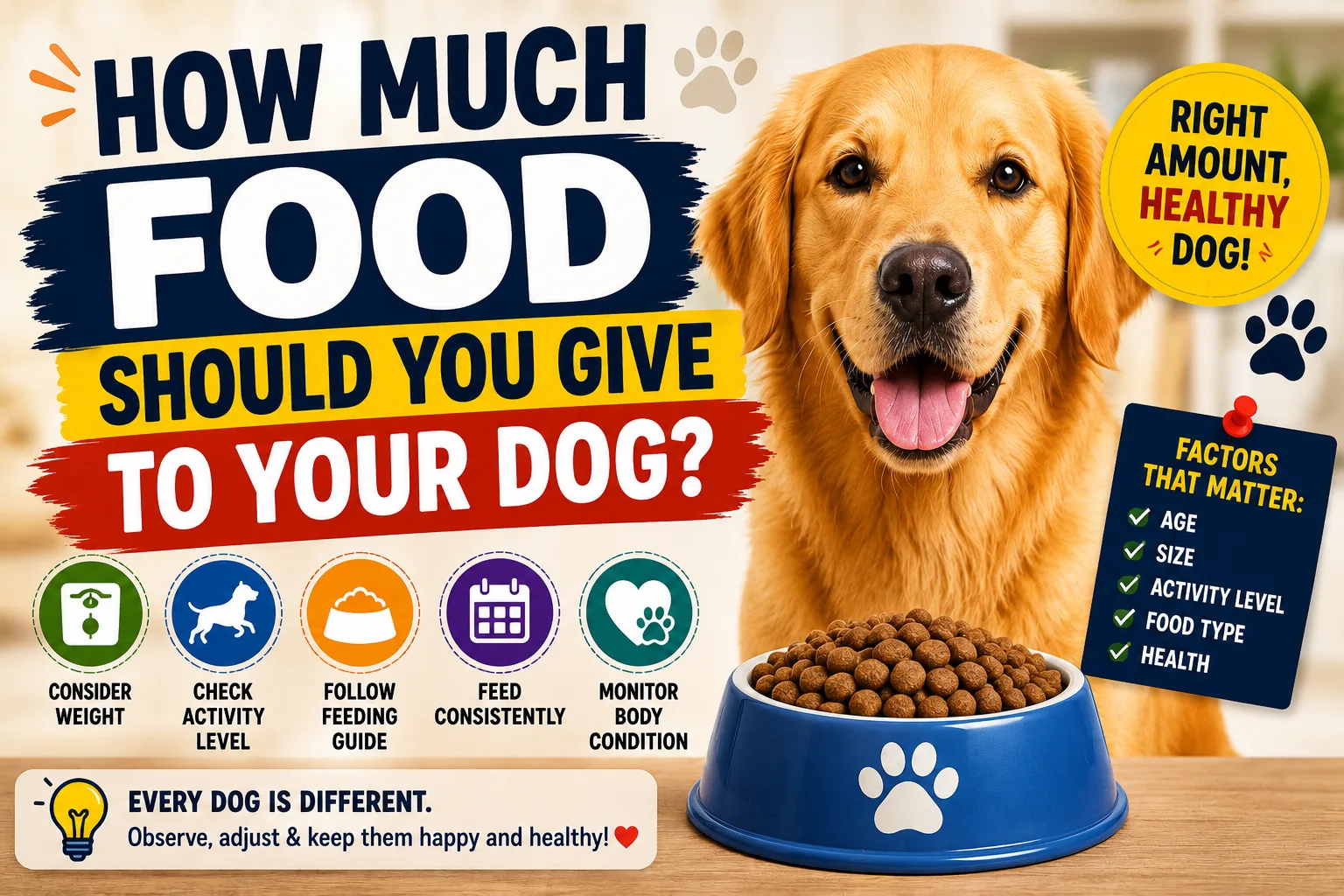
Knowing how much food to give your dog is just as important as choosing the right food. Feeding too little can prevent your dog from getting the nutrients and energy they need, while overfeeding can lead to excessive weight gain and other health problems.
But there isn’t one perfect portion size for every dog. The right amount depends on your dog’s age, size, weight, activity level, health, and the type of food you are feeding.
Here’s how to determine the right amount for your dog.
1. Start With the Feeding Guide
The easiest place to begin is the feeding chart printed on your dog’s food package.
These guidelines usually provide recommended daily amounts based on your dog’s body weight. However, they are only a starting point because individual dogs have different energy requirements.
For example, two dogs of the same weight may need different amounts if one is highly active and the other spends most of the day resting.
2. Consider Your Dog’s Age
Your dog’s life stage affects how much food they need.
Puppies
Puppies are growing rapidly and generally need more energy and nutrients relative to their body size than adult dogs. They may also need multiple meals throughout the day.
Choose food specifically formulated for puppies and follow the feeding recommendations for their expected adult size where applicable.
Adult Dogs
Adult dogs generally need enough food to maintain a healthy body condition without causing excessive weight gain.
The right amount depends heavily on activity level and metabolism.
Senior Dogs
Older dogs may become less active and therefore require fewer calories. However, nutritional needs vary considerably among senior dogs.
A veterinarian can help determine the appropriate feeding amount, particularly if your dog has a health condition.
3. Your Dog’s Weight Matters
Weight is one of the most important factors when determining feeding amounts.
Regularly monitor your dog’s weight and body condition rather than relying only on the measuring guide on the food package.
A healthy dog should have an appropriate amount of body fat, with the ribs generally easy to feel without being visibly prominent.
If you are unsure whether your dog is underweight or overweight, ask your veterinarian for a body-condition assessment.
4. Activity Level Makes a Difference
An active dog that runs, plays, or exercises regularly may require more calories than a dog with a sedentary lifestyle.
For example:
- Highly active dogs: May need more calories.
- Moderately active dogs: Usually need a moderate amount.
- Less active dogs: May require fewer calories to maintain a healthy weight.
However, avoid increasing portions dramatically just because your dog appears energetic. Monitor their body condition and adjust feeding accordingly.
5. Don’t Forget Treats
Treats are part of your dog’s overall calorie intake.
Giving several treats throughout the day in addition to full meals can contribute to unwanted weight gain.
A good habit is to keep treats and snacks limited and account for them when considering your dog’s daily food intake.
You can also use small pieces of your dog’s regular food as training rewards.
6. Measure Your Dog’s Food
Instead of estimating portions by eye, use a measuring cup or, even better, a kitchen scale when precise portions are important.
Consistent measurements make it easier to control your dog’s calorie intake and notice when adjustments are needed.
This is especially useful for dogs that are prone to weight gain.
7. How Often Should You Feed Your Dog?
Meal frequency depends on age, size, lifestyle, and individual needs.
A common routine is:
Puppies: Several smaller meals throughout the day
Adult dogs: Often two meals per day
Senior dogs: Often one or two meals depending on individual needs
Some dogs may need a different feeding schedule. Follow your veterinarian’s advice if your dog has specific dietary requirements.
8. Dry Food and Wet Food Have Different Calorie Densities
You cannot assume that the same volume of dry and wet food provides the same number of calories.
Wet food contains much more water, so a larger volume may be needed to provide the same calories as a smaller amount of dry food.
When combining wet and dry food, check the calorie information on both products and adjust the portions accordingly.
9. Watch Your Dog’s Body Condition
Your dog’s body condition is a useful indicator of whether their current food intake is appropriate.
Signs that your dog may be receiving too many calories can include:
- Noticeable weight gain
- Difficulty feeling the ribs
- Reduced activity
- Increasing body fat around the abdomen
Signs that your dog may not be getting enough food can include:
- Unintended weight loss
- Low energy
- Poor body condition
If you notice unexplained changes in your dog’s weight, appetite, or energy, consult your veterinarian.
10. Adjust Portions When Necessary
Your dog’s feeding needs can change over time.
You may need to adjust portions if:
- Your dog becomes more or less active.
- Their weight changes.
- They move from puppyhood into adulthood.
- Their daily treat intake changes.
- Their health or lifestyle changes.
Make gradual adjustments rather than making large changes without guidance.
Simple Example
Imagine the food packaging recommends a certain daily amount for a dog weighing 20 kg.
If your dog is very active, the appropriate amount may differ from that recommendation. If your dog is less active or gaining weight, they may need fewer calories.
This is why packaging guidelines should be treated as a starting point rather than an exact prescription.
When Should You Talk to a Veterinarian?
It’s a good idea to consult your veterinarian if your dog:
- Is significantly overweight or underweight
- Is losing or gaining weight unexpectedly
- Has a medical condition
- Has unusual eating or drinking habits
- Is pregnant or nursing
- Is a growing puppy with special nutritional requirements
Your veterinarian can calculate or recommend an appropriate feeding plan based on your dog’s individual needs.
Final Thoughts
There is no universal amount of food that is right for every dog. The best feeding amount depends on your dog’s weight, age, activity level, food type, body condition, and individual health needs.
Start with the feeding guide on your dog’s food, measure portions consistently, limit extra treats, and regularly monitor your dog’s body condition.
And remember: a healthy portion is better than a full bowl.
If you’re ever unsure about how much to feed your dog, your veterinarian can help you create a feeding routine that supports a healthy weight and a happy, active life.