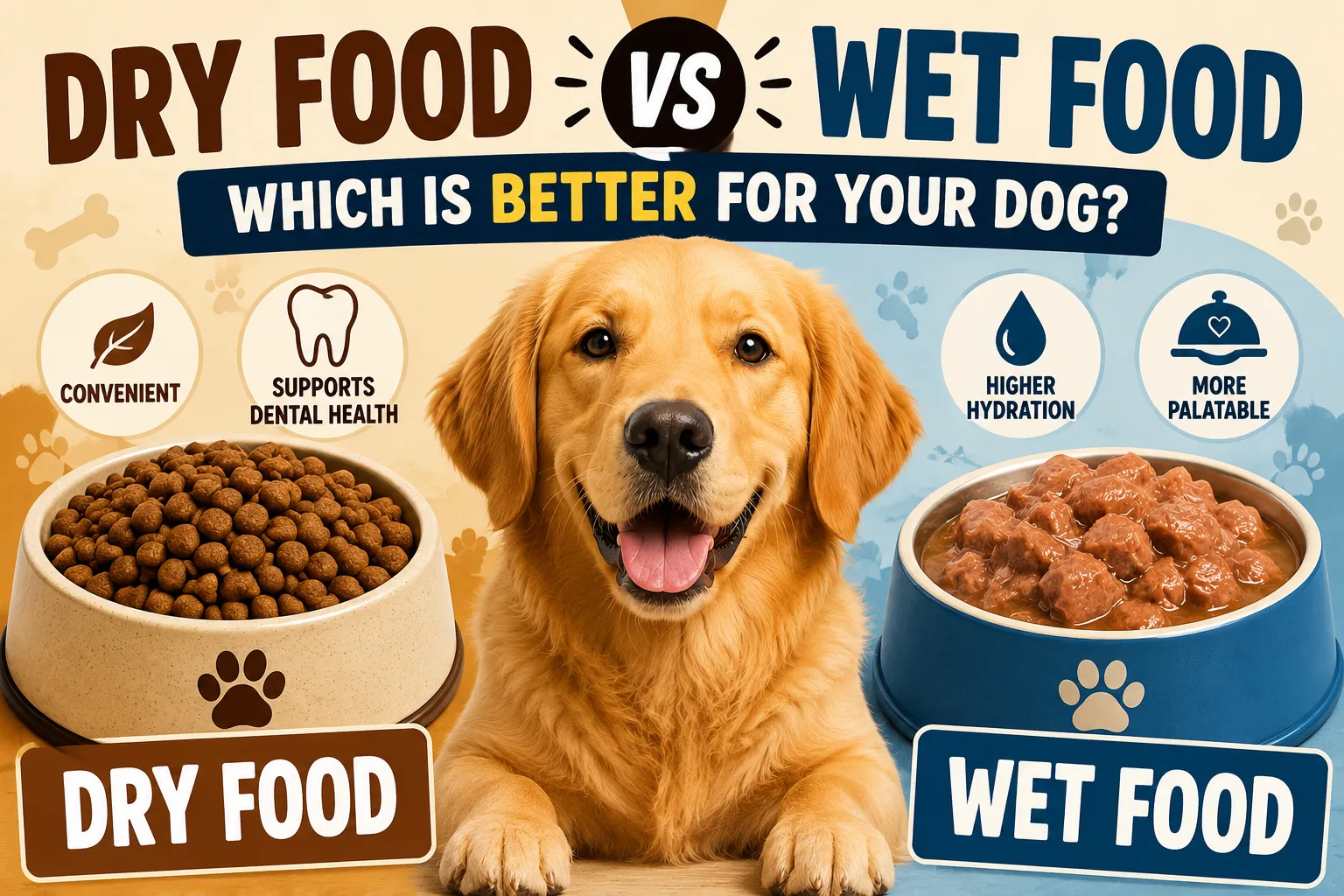
Choosing the right food for your dog can be confusing, especially when you’re deciding between dry food and wet food. Both options can provide important nutrients, but each has its own advantages.
So, which one is better for your dog? The answer depends on your dog’s age, health, lifestyle, preferences, and nutritional needs.
What Is Dry Dog Food?
Dry dog food, commonly known as kibble, is made by combining ingredients and processing them into small, crunchy pieces.
Benefits of Dry Food
1. Convenient and Easy to Store
Dry food is simple to measure, store, and serve. It generally has a longer shelf life after opening compared with wet food.
2. Easy Portion Control
Because kibble is easy to measure, it can be convenient for managing your dog’s daily food intake and weight.
3. Helps Reduce Plaque Buildup
The crunchy texture of some dry foods may help reduce plaque mechanically as your dog chews. However, regular kibble should not be considered a substitute for proper dental care or veterinary dental treatment.
4. Often More Cost-Effective
Dry food is often more economical per serving and can be a practical option for many pet parents.
5. Less Messy
Kibble is easy to serve and can be left in a suitable feeding area without the same level of mess associated with wet food.
What Is Wet Dog Food?
Wet dog food usually contains more water and comes in cans, trays, or pouches. It is available in different textures, including pâté, chunks, and gravy-based recipes.
Benefits of Wet Food
1. Higher Water Content
Because wet food contains a significant amount of water, it can contribute to your dog’s overall fluid intake.
2. Appealing to Picky Eaters
Many dogs find wet food highly palatable because of its aroma, texture, and moisture.
3. Easier to Eat
Its soft texture can be useful for dogs that have difficulty chewing harder foods, although dogs with dental or medical problems should be evaluated by a veterinarian.
4. Useful for Some Dogs With Specific Needs
Depending on the formula, wet food can be useful for dogs with certain nutritional or medical requirements. A veterinarian can recommend an appropriate diet when a medical condition is involved.
Dry Food vs. Wet Food: A Quick Comparison
| Feature | Dry Food | Wet Food |
|---|---|---|
| Water content | Lower | Higher |
| Storage | Easy | Requires more care after opening |
| Portion control | Easy | Can require more careful measuring |
| Texture | Crunchy | Soft and moist |
| Palatability | Good for many dogs | Often highly appealing |
| Convenience | Very convenient | Convenient but needs refrigeration after opening |
| Cost per serving | Often lower | Often higher |
| Dental benefits | Some mechanical chewing benefit | Little mechanical cleaning |
Which One Is Better for Your Dog?
There is no single answer that works for every dog.
Dry food may be a great choice if you want convenience, easy portion control, and a food that is simple to store.
Wet food may be a better fit for dogs that prefer moist food, need additional dietary moisture, or have difficulty eating dry textures.
For some dogs, a combination of wet and dry food can work well. However, you should account for the calories and nutrients from both foods so your dog does not accidentally overeat.
What Should You Look for When Buying Dog Food?
Whether you choose dry or wet food, the most important factor is nutritional quality.
Look for a food that is:
- Complete and balanced for your dog’s life stage
- Appropriate for your dog’s size and activity level
- Suitable for any specific dietary needs
- Made by a reputable manufacturer
- Fed in appropriate portions
Don’t choose a food based only on attractive packaging or one ingredient highlighted on the front of the package.
Don’t Forget Your Dog’s Individual Needs
Every dog is different. A young puppy, an active adult dog, a senior dog, and a dog with a medical condition may have very different nutritional requirements.
If your dog has allergies, digestive problems, kidney disease, obesity, dental issues, or another health concern, speak with your veterinarian before making major dietary changes.
Final Verdict
Dry food and wet food can both be good choices for dogs when they provide complete and balanced nutrition and are fed appropriately.
Instead of asking, “Which food is better?”, ask, “Which food is best suited to my dog’s individual needs?”
Consider your dog’s age, size, activity level, preferences, hydration needs, health, and your own feeding routine. With the right food, appropriate portions, fresh water, and regular veterinary care, you can help your dog enjoy a healthy and happy life.
The best food is the one that meets your dog’s nutritional needs and fits their lifestyle.