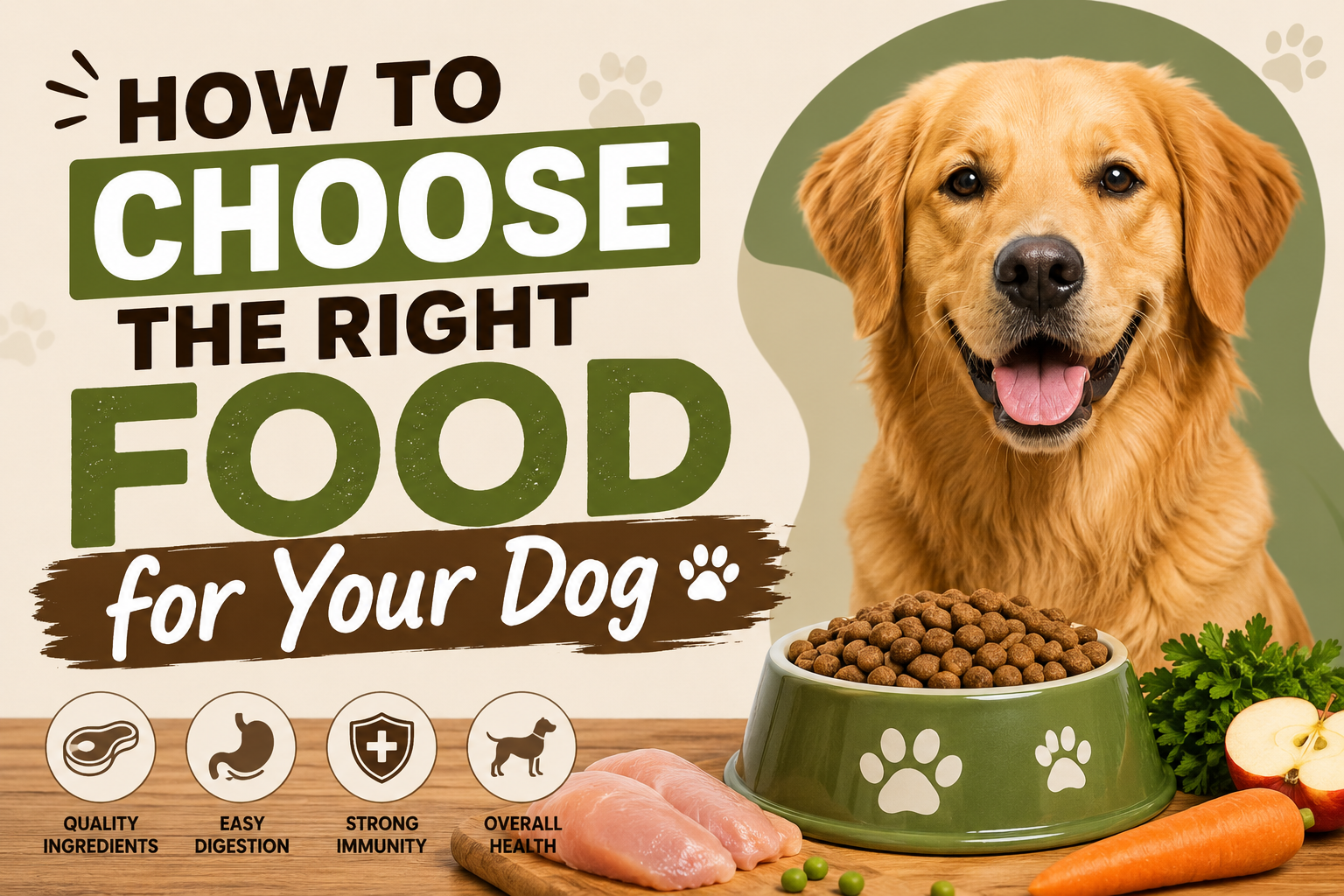
Choosing the right food for your dog is one of the most important decisions you can make as a pet parent. A balanced diet supports healthy growth, strong immunity, a shiny coat, good digestion, and an active lifestyle. But with so many dog food options available, finding the right one can feel confusing.
Here are some important factors to consider when choosing food for your dog.
1. Consider Your Dog’s Age
Dogs have different nutritional needs at different stages of life.
- Puppies need food rich in protein, calories, and essential nutrients to support growth and development.
- Adult dogs need a balanced diet that helps maintain healthy weight, muscles, and energy levels.
- Senior dogs may benefit from food designed to support joint health, digestion, and healthy aging. Always choose food that is appropriate for your dog’s life stage.
2. Choose Food Based on Your Dog’s Size
A Chihuahua and a Great Dane don’t have the same nutritional requirements. Small, medium, and large breeds can have different calorie and nutrient needs.
Look for food specifically formulated for your dog’s size when appropriate. This can also help ensure that the kibble size is comfortable for your dog to eat.
3. Check the Ingredients
The ingredient list can tell you a lot about the food you are buying. Look for a nutritionally complete formula with appropriate sources of protein, carbohydrates, fats, vitamins, and minerals.
Protein sources such as chicken, fish, lamb, or other suitable animal proteins are commonly included in dog food. However, the best choice depends on your individual dog’s nutritional needs and tolerance.
Avoid choosing a food simply because one ingredient sounds impressive. The overall nutritional balance matters most.
4. Think About Your Dog’s Activity Level
An active dog that spends lots of time running and playing may require more energy than a dog with a mostly indoor lifestyle.
Working dogs and highly active dogs may need diets with different calorie levels, while dogs with lower activity levels may need careful portion control to avoid unwanted weight gain.
5. Consider Allergies and Food Sensitivities
Some dogs can develop food allergies or sensitivities. Signs may include recurring digestive problems, itching, skin issues, or other unusual symptoms.
If you suspect your dog has a food allergy or intolerance, don’t randomly eliminate ingredients. Speak with a veterinarian, who can help identify the cause and recommend an appropriate diet.
6. Choose the Right Portion Size
Even high-quality dog food can contribute to weight gain if your dog eats too much.
Start with the feeding guidelines on the package and adjust based on your dog’s size, activity level, age, and body condition. Treats should also be included when considering your dog’s overall daily calorie intake.
Fresh drinking water should always be available.
7. Wet Food, Dry Food, or Both?
Dry food is convenient, easy to store, and simple to portion.
Wet food can be appealing to some dogs and has a high water content.
Some pet parents choose to combine wet and dry food. If you do this, make sure the total amount of food is appropriate for your dog’s daily nutritional and calorie requirements.
8. Don’t Change Food Too Quickly
If you decide to switch your dog’s food, make the transition gradually. Suddenly changing diets can cause digestive upset in some dogs.
A gradual transition over several days can help your dog adjust to the new food. If your dog develops persistent vomiting, diarrhea, refuses food, or seems unwell, contact a veterinarian.
9. Pay Attention to Your Dog’s Response
Your dog’s overall condition can provide useful clues about whether their diet is working well.
Look for signs such as:
- Healthy body condition
- Good energy levels
- Healthy-looking skin and coat
- Normal digestion
- Regular appetite
- Healthy stool consistency
Remember that every dog is different. A food that works well for one dog may not be the best choice for another.
10. When in Doubt, Ask Your Veterinarian
Your veterinarian can help you choose a diet based on your dog’s age, breed or size, activity level, body condition, and specific nutritional needs. This is especially important if your dog is overweight, has a medical condition, is pregnant or nursing, or has suspected food allergies.
Final Thoughts
Choosing the right food for your dog isn’t about finding the most expensive product or the most popular brand. It’s about finding a complete and balanced diet that suits your dog’s individual nutritional needs.
Take time to read the label, consider your dog’s age and lifestyle, monitor their health, and consult your veterinarian when needed. With the right nutrition and proper portion control, you can help your dog stay happy, healthy, and active for years to come.
Because every happy tail starts with good nutrition!